
Travel to Puglia and basilicata

Bari and surroundings
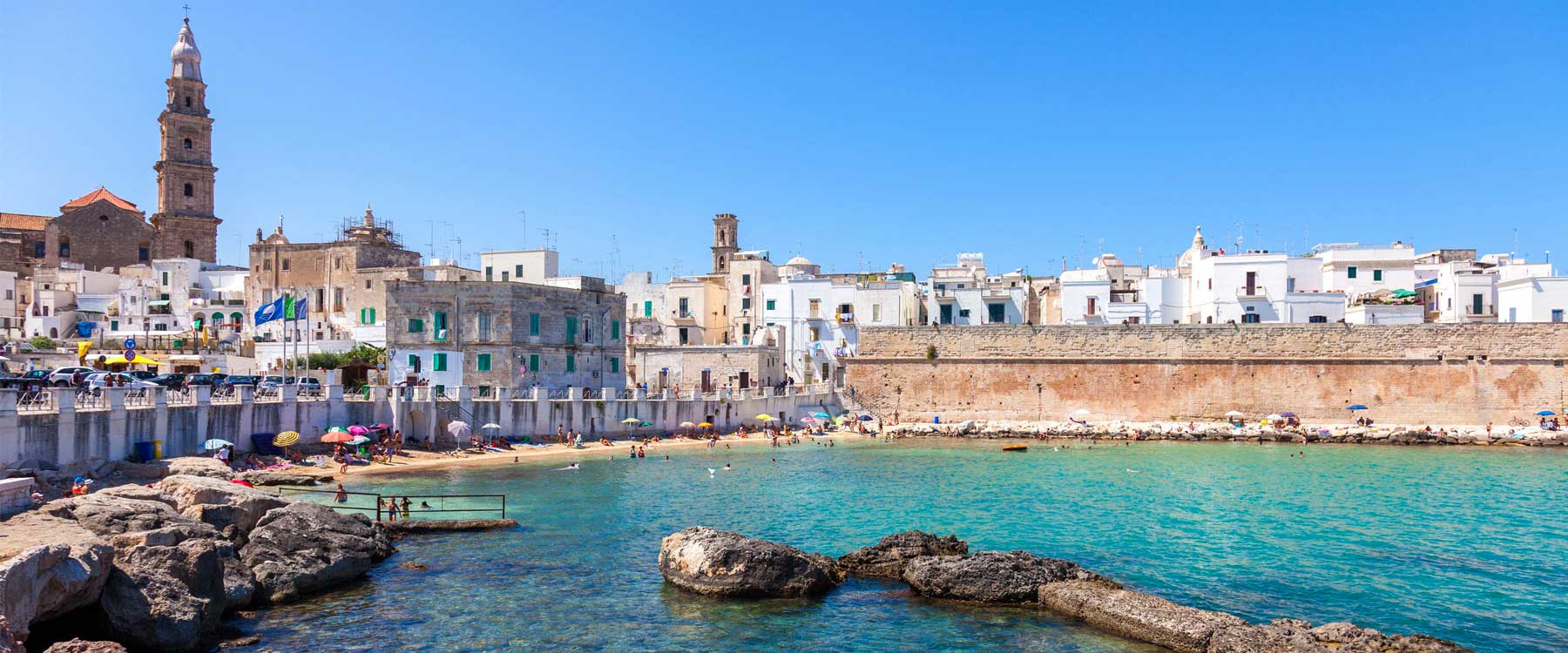
Important commercial city of south Italy, oriental warm and cheerful, Bari is also a city full of history and rich in monuments and churches. The winding narrow streets of the historic centre, also known as Barivecchia, with its dialect, the habits, the festivity, its vestigia and scars from the various dominations such as Byzantine, Norman, Swabian, Angevin and Aragonese will make you discover a city rich in traditions. In the Barivecchia, women carry on at their front door the culinary tradition of making the legendary orecchiette, a special pasta shape typical of Bari.
Trani, an esteemed seaside resort, hides behind its modern buildings a city centre and monuments that remind of a particularly rich middle age. The roadstead of the tiny harbour and the white and ochre facades make up a truly pitoresque lansdcape. In the old city centre, you'll find several narrow roads and lively piazzas. The beautiful cathedral stands up alone at the edge of the harbour, almost skimming the water.
Not to miss: Polignano a mare, perched on a cliff falling sheer to the sea, is one of the typical villages of the coast of Bari. Gravina in Puglia, Minervo Murge, Altamura well known for its traditional bread, the castle of Casteldelmonte, the Duomo of Molfetta, the cathedrals of Bisceglie and Bitonto, Castellana caves, Fasano and its "Selva", the Murgia withs its landscapes drawing cliffs, gorges and caves, the city of Monopoli, last fishing port along the coast before Brindisi, still keeping its old style thanks to the medieval roads of the historic centre protected by the castle strategically placed on the sea front.
Gargano
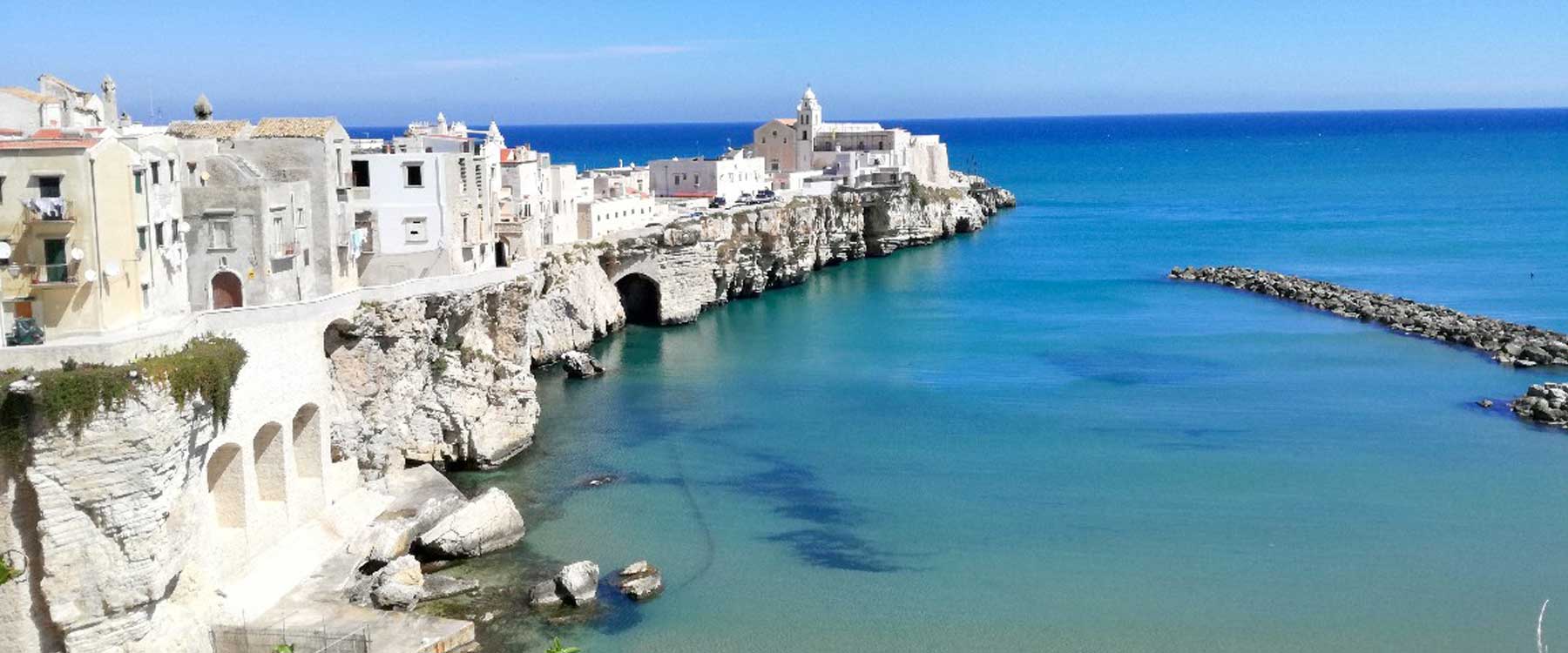
The Gargano peninsula is covered by forests of pine and holm oak, olive groves, almond and orange trees. Alternating high cliffs revealing coves with crystal clear water and long sandy beaches draw the coastal scenery. The inland is largely covered by the lush vegetation of the Umbra forest constituting the heart of the Gargano National Park. Picturesque white villages with winding alleys along with a natural landscape of great beauty make it a popular tourist destination. Not to miss: Umbra forest, Peschici, Vieste, Monte Sant'Angelo, Mattinata, Tremiti islands, Verano and Lesina lakes.
Itria valley
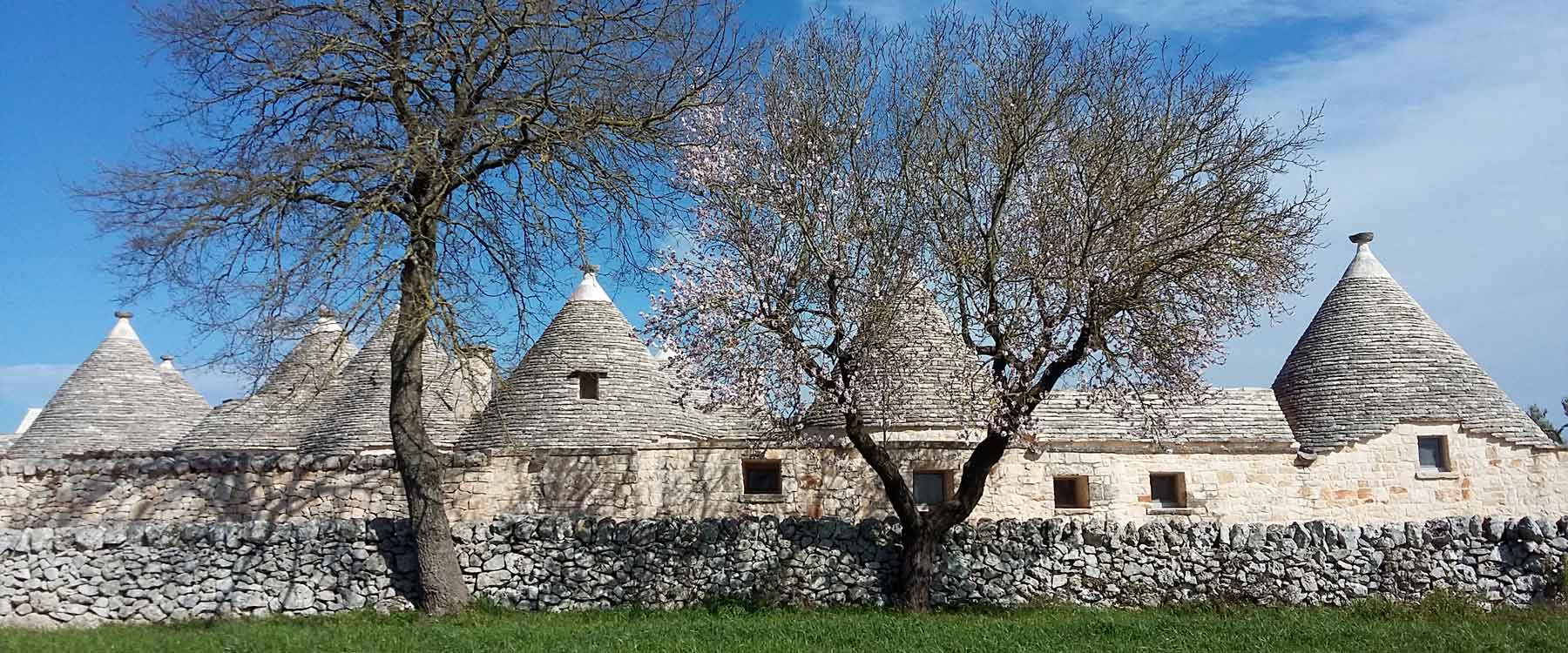
With its trullis, the typical small houses with conic roofs and white clay facades, Alberobello seems a town coming out from a fairy tale. Today a UNESCO world heritage treasure, the trulli area counts more than 1000 habitations sprinkled alongside the tiny paved roads over the hill. Many trullis now have been converted into shops or art galleries. Avoid the very tourist area to enjoy and fully appreciate this astonishing town. Take a walk into the countryside of the Itria valley to appreciate the magic of this land, a countryside populated of secular crooked olive-trees and bordered with tiny dry-stone walls, and to discover Martina Franca, Locorotondo, Ceglie Messapica and Cisternino. Ostuni, the city perched over three hills, seems a greek city with its white clay facades. The only colour touches are given by the pot of flowers on the balconies and the coloured shutters. From its location, Ostuni dominates a huge valley of olive-groves producing an excellent extra virgin oil. Do not miss the cathedral with its magnificent rose-window, built in the 15th century in roman and gothic style. The archaeologic museum and a visit to a Frantoio, an ancient oil-mill.
Salento
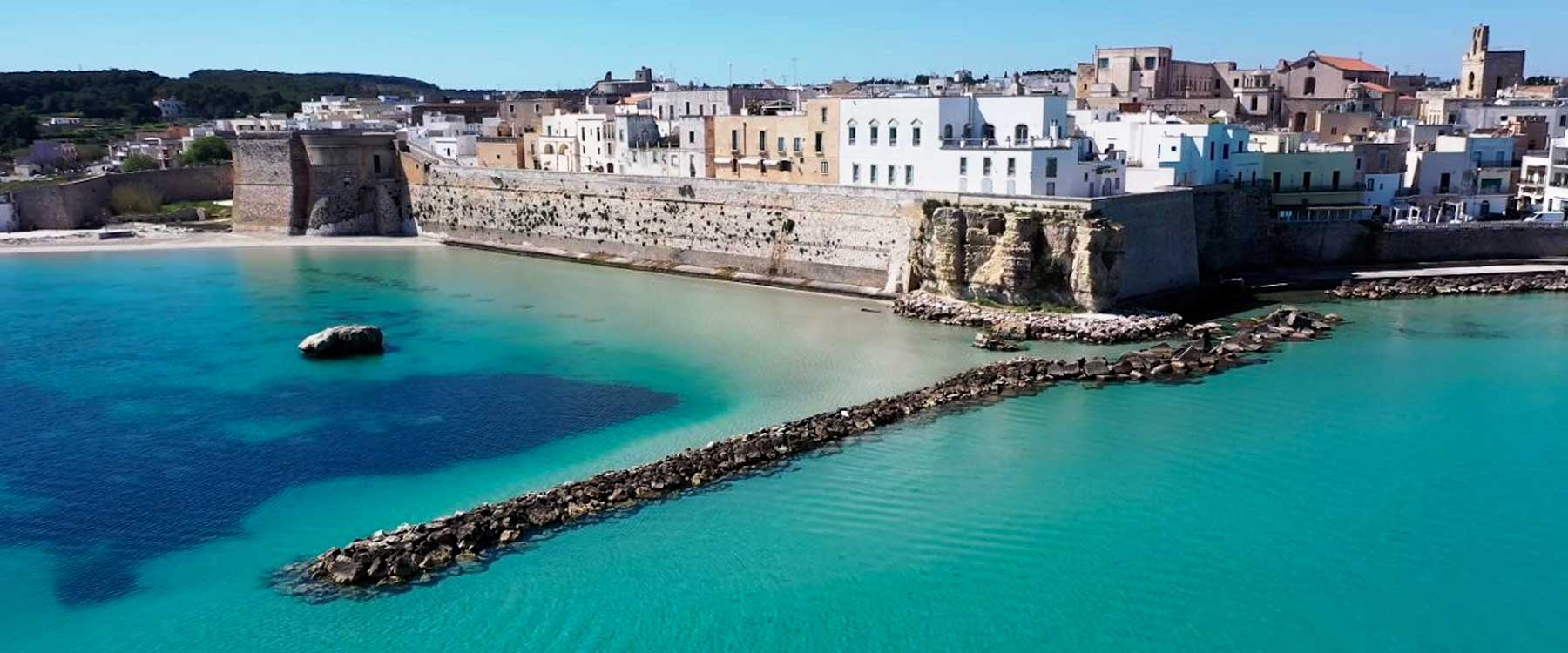
Lecce stands in the heart of the salento peninsula, the furthermost southeastern region of Italy. Blonde and refined it is called the baroque Florence. From 16th to 18th century the most extravagant architects and stone-cutters have covered the city with monuments of different styles such as Baroque, Renaissance and Rococo. First a greek town, then roman, Otranto is a fortified town standing on a cliff facing the adriatic sea. The city is proud to possess one of the most ancient cathedrals of Apulia and the cathedral itself shelters an extraordinary mosaic pavement, probably the only one in Europe of its kind. With superbs white sandy beaches, Otranto is also a well known sea-side resort. Built on an island, the old town of Gallipoli is connected to the modern city by a bridge. Once past the bridge, elegant 18th century palaces stand along simple fishermen houses and numberless churches. Needless to say that also Gallipoli is well esteemed sea side resort with sandy beaches and crystal clear waters. Not to miss: The church of S.Caterina of Alessandria in Galatina, the town of Specchia and city of Nardo. Take the coastal road from Otranto to Santa Maria di Leuca passing nearby Castro, with natural marine reserves. The coast here is cliffy and unveils an unexpected wild landscape. From Santa Maria di Leuca to Porto Cesareo, the coast is less abrupt and gives glimpses of beautiful beaches.
Basilicata
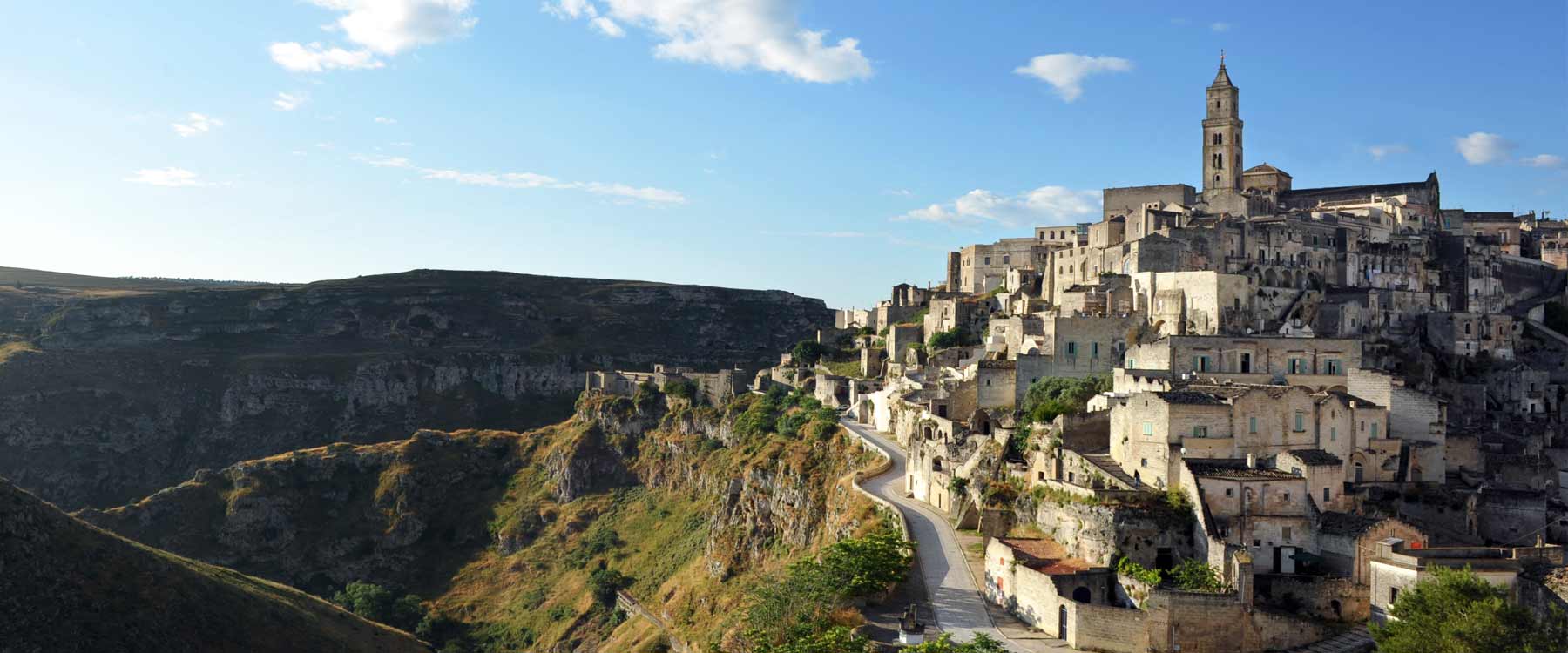
Also known as Lucania, Basilicata is a land of contrasts, offering visitors lunar landscapes such as the site of Matera caves today classified World Heritage by UNESCO, the sandy beaches of the Ionian coast and the coves on the rugged coastline of the Tyrrhenian Sea. It is also a region rich of archaeological remains and villages built on a mountainside in the Lucan Dolomites, rock churches and natural landscapes of rare beauty. Basilicata is a land of popular tradition that has preserved over times its entire heritage, such as the cuisine rich in flavor and simple.
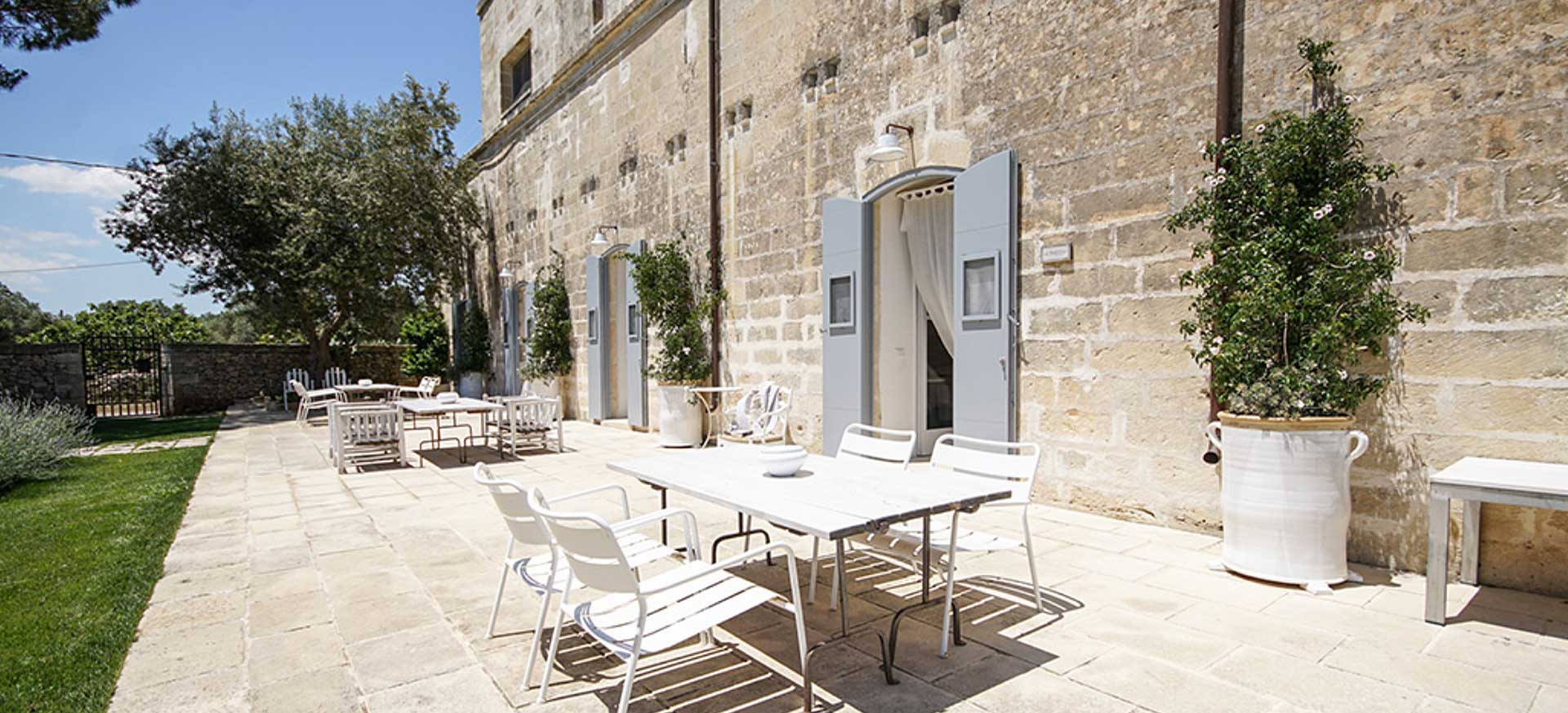
Set in the beautiful countryside of Salento, between Otranto and Lecce, this Bed... Visit the bed & breakfast
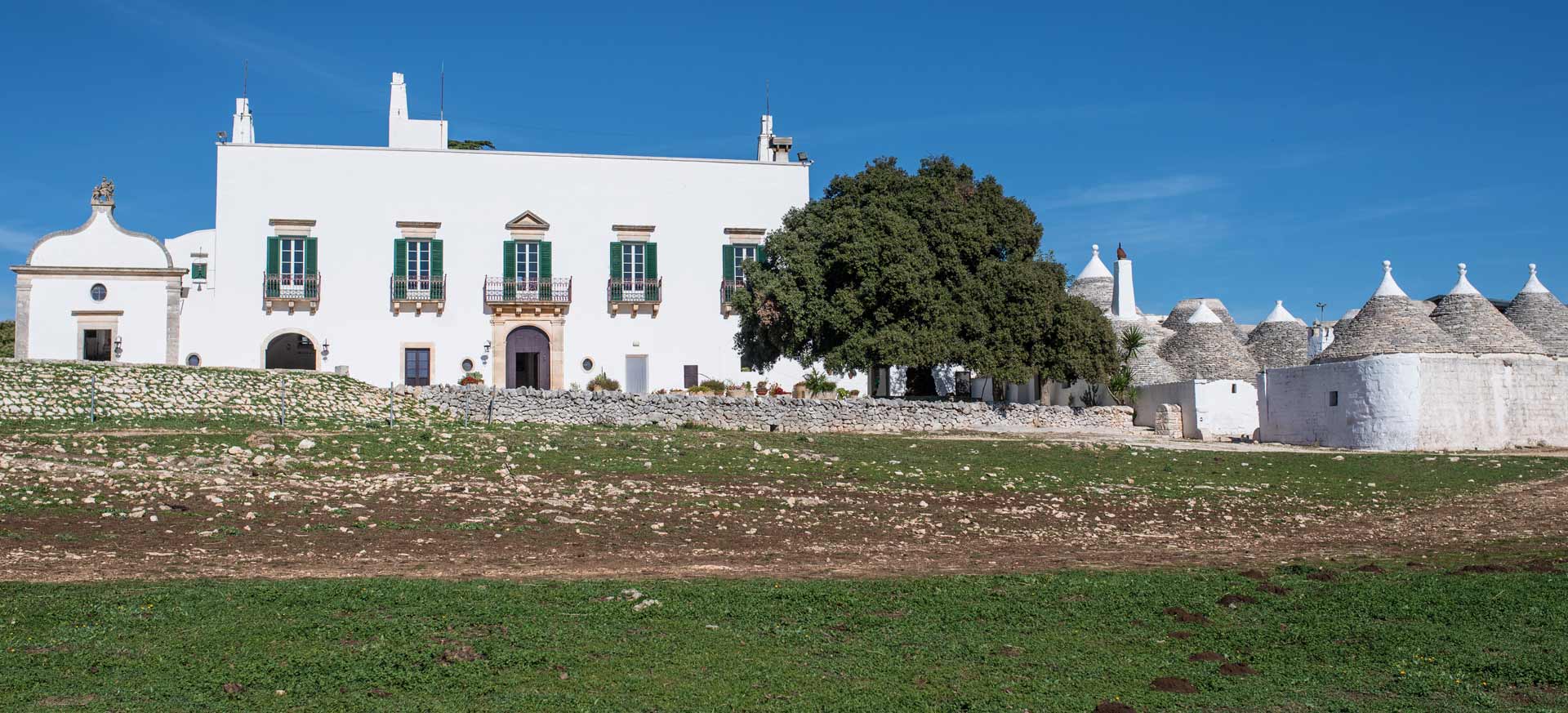
Country break in an authentic Masseria located in the beautiful countryside of M... Visit the villa
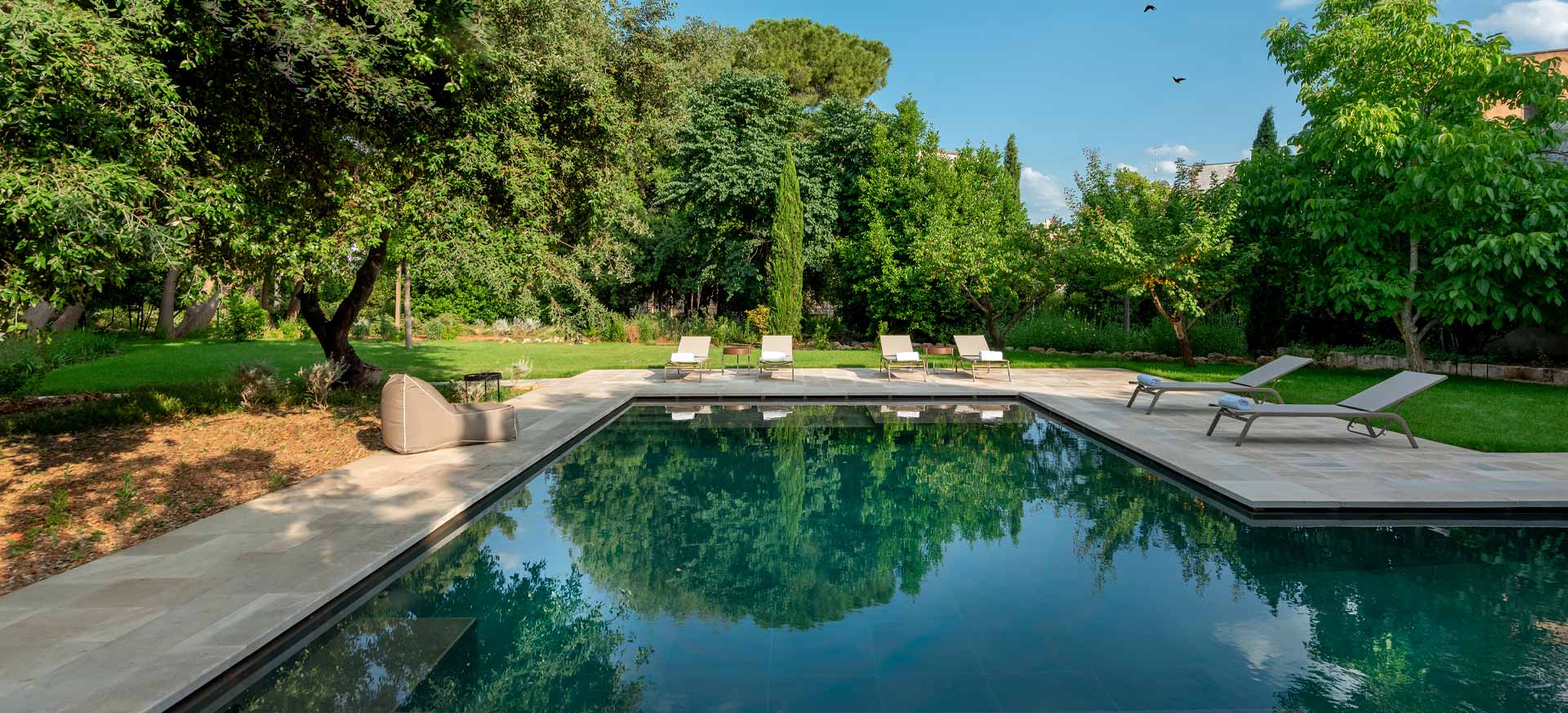
In the heart of the historic center of Manduria, town of Primitivo di Puglia win... Visit the hotel
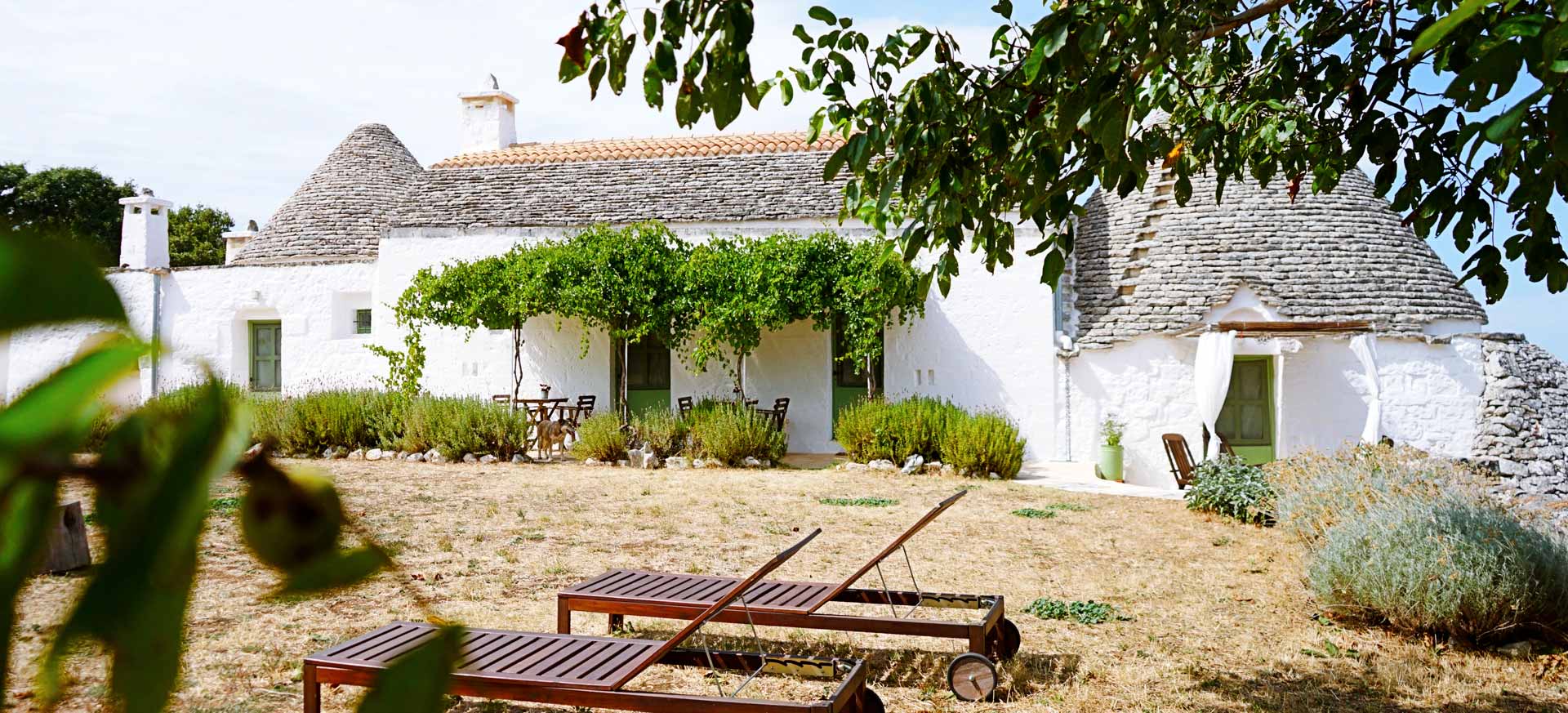
Authentic masseria located in the countryside of Martina Franca offering guests ... Visit the agriturismo